
In this article
- Discover practical winter energy-saving tips to slash your household expenses!
- Should you replace or repair your appliances this winter? Here’s what you need to know.
- How often should you service your heating system for maximum efficiency?
- Gas vs. electric heating: Which is the best choice for your home this winter?
- Looking to save more? Explore our guides on water efficiency, the Tasmanian energy saver loan, saving for a deposit, and try our savings tracker!
As winter sets in, we reluctantly move from summer shorts and thongs to winter woollies and thermals and turn to our electrical heating to stay warm and cosy. Unfortunately, this can also lead to higher bills due to inefficient heaters, appliances and poor insulation.
To combat this, we have some helpful tips for improving energy efficiency and lowering costs. So, sit back and enjoy a more comfortable home without breaking the bank!
Winter energy saving ideas

A well-insulated home
Did you know that a well-insulated home can reduce your energy use by up to 45% or more? Having your roof, walls and floors insulated will provide a more comfortable home and can reduce condensation on your windows all year round.
You can also insulate your hot water pipes, reducing heat loss and raising the water temperature. Doing this can lower your water temperature setting and save energy annually.
Insulating with furnishings
Insulation doesn’t have to be boring. You can revamp your rooms by investing in rugs for bare floors or insulating curtains in regularly used rooms. These additions not only change the feel of the space but can also prevent heat from escaping your home.
Rugs can store heat about 10-12% better than hard surfaces and, therefore, are a cost-effective way to reduce heat loss in your home.
Seal the drafts
Simply sealing any cracks or gaps in your home can decrease heat loss. You don’t want your money slipping through the cracks, so it's essential to arrange to seal any gaps in your windows, doors, and floors.
Walk around your home and check for drafts around your windows and doors. You can seal gaps in doors and windows using self-adhesive foam or rubber strips, install weather-proof door seals, or purchase a door snake as an inexpensive fix to stop drafts from coming through the front or back door.
Close and open the curtains
A great way to save money and maintain the heat in your home is to close your blinds or curtains just before the sun goes down and re-open them in the morning. This allows the morning sun to stream into your home and heat each space.
Opening the curtains and using the air conditioner at a constant temperature will also help prevent condensation on your windows or at least dry the condensation that has developed overnight as soon as possible.
Get warm without turning up the heat

If you want to cut down on your winter heating bills, there’s no point cranking the heater to a balmy 25°C and wandering around the house in your singlet and shorts. Rather than focusing all your energy on warming up your home, focus on keeping yourself cosy.
Invest in some woollen socks and slippers, layer up with warm clothing and enjoy hearty winter meals that will warm you up from the inside out. Take some time to relax under a blanket with a hot cup of tea, and wrap yourself up in fresh flannel sheets, a warm wheat pack, and a feather-down comforter before heading to bed.
Opt for off-peak
Knowing your supplier's peak and off-peak times is important to avoid high bills. For example, Aurora's Residential Tariff has peak periods from Monday to Friday, 7 am—10 am and 4 pm—9 pm, and off-peak periods from 10 pm—7 am on weekdays and 24 hours on weekends. For the most up-to-date times, click here.
To save money, consider running your dishwasher after 10 pm or waiting until the weekend to do your laundry. These small changes can help you regularly use power at a lower rate.
Invest in a heat pump hot water system
A heat pump hot water system is an energy-efficient design that uses renewable energy to heat water without the need for solar panels. The system absorbs the heat from the surrounding air and heats the water.
All systems go – or are they?
Buying cheap or less energy-efficient appliances could cost you more in the long run. If your appliances work harder than needed or are not energy efficient, your energy bill will be higher.
Instead, when purchasing a new appliance, consider the price tag, the energy efficiency level, and the length of the life warranty. Over time, the money you save could pay for the extra cost of a more energy-efficient and longer-lasting appliance.
Run appliances on the eco setting
The eco setting on appliances has been found to deliver the lowest energy consumption across brands and models. Furthermore, the default quick washing programs consume 20-30% more energy than the eco settings, and temperatures above 30°C can increase the energy use by 30% or more.
Combining a lower water temperature, eco mode, and an effective detergent will save you money on your energy and water bills.
Run a full washing load
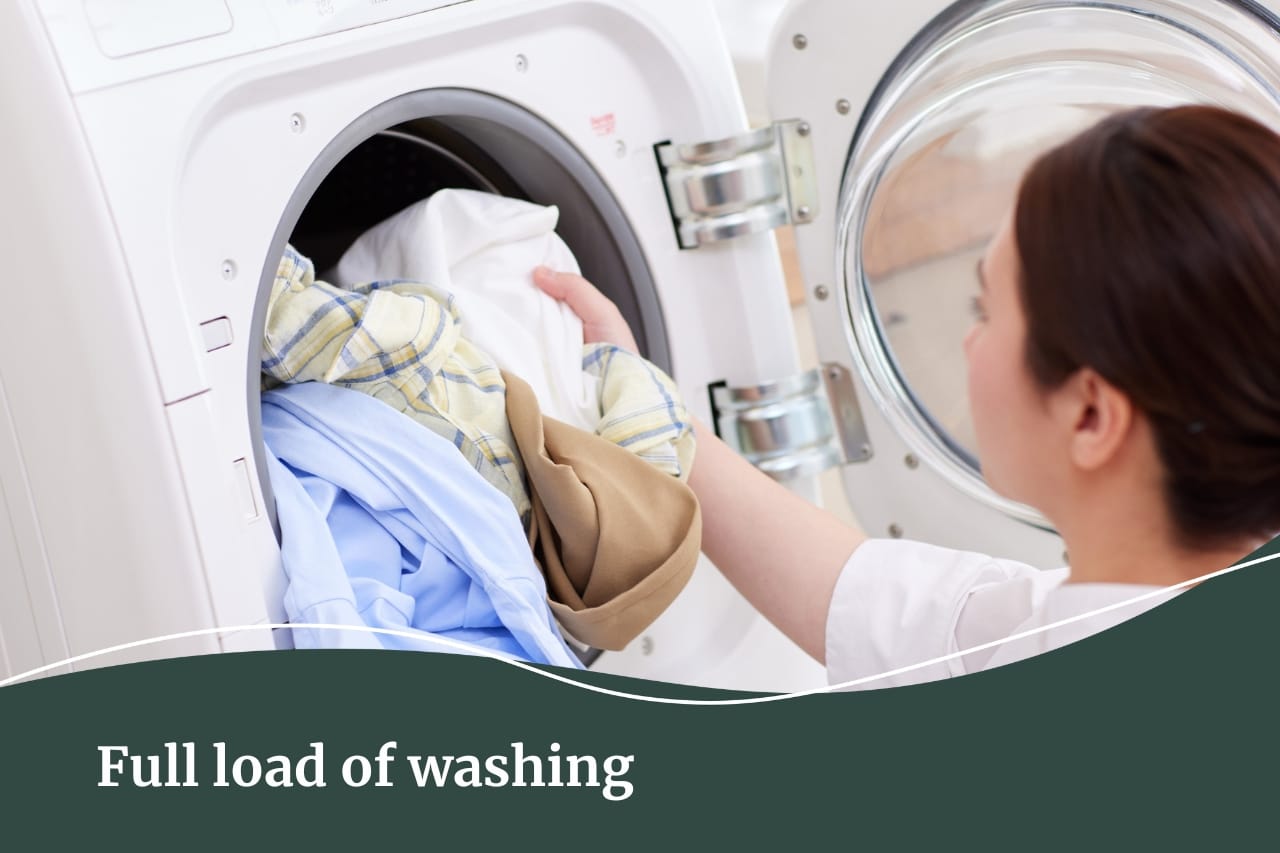
Avoid running a washing load that is half full or has only one or two items. Did you know that the average laundry basket is only 3.5kg? Many washing machines' limits are much higher, so make sure to fill your washing machine up!
While saving money by doing fewer loads, consider putting the wash on the cold setting. When washing your clothes, a lot of energy is used to heat the water. Even if you wash half your loads with cold water and the other half with hot water, you will be halving your washing machine's energy usage!
Maintain your appliances
How you use and maintain each appliance can impact your energy bill. Get a professional to check your heating and cooling systems to improve energy efficiency and air quality. A dirty filter means your heat pump works harder, ultimately increasing your energy bill.
Checking each appliance's efficiency will ensure that unnecessary energy isn’t used. Consider your refrigerator; if it has an ineffective seal, cool air will escape, resulting in the appliance working harder to maintain the set temperature.
Buy instead of repair
Consider investing in a new appliance if the repair is more than 50% of the price of a new one. What you save with a new, more energy-efficient appliance will likely pay off the extra expense quickly!
Many appliance brands have significantly improved their energy efficiency in recent years - possibly using 40-60% less energy than older models. Therefore, finding out the difference in energy efficiency between your appliance and a new one could potentially lower your electricity bill.
Ditch your additional appliances
Take a walk around each space in your home. Look at each appliance. Is it really needed, and is it being used? On average, appliances on standby can contribute up to 10% of your electricity bill, so looking out for appliances that do not need to be plugged in or ones you can sell secondhand could save money.
Consider whether you need the additional fridge in the garage, the ancient plasma sitting in your spare room, or the desktop computer in ‘sleep’ mode sitting in your study gathering dust while you use your laptop.
Turn off non-essential appliances at the switch
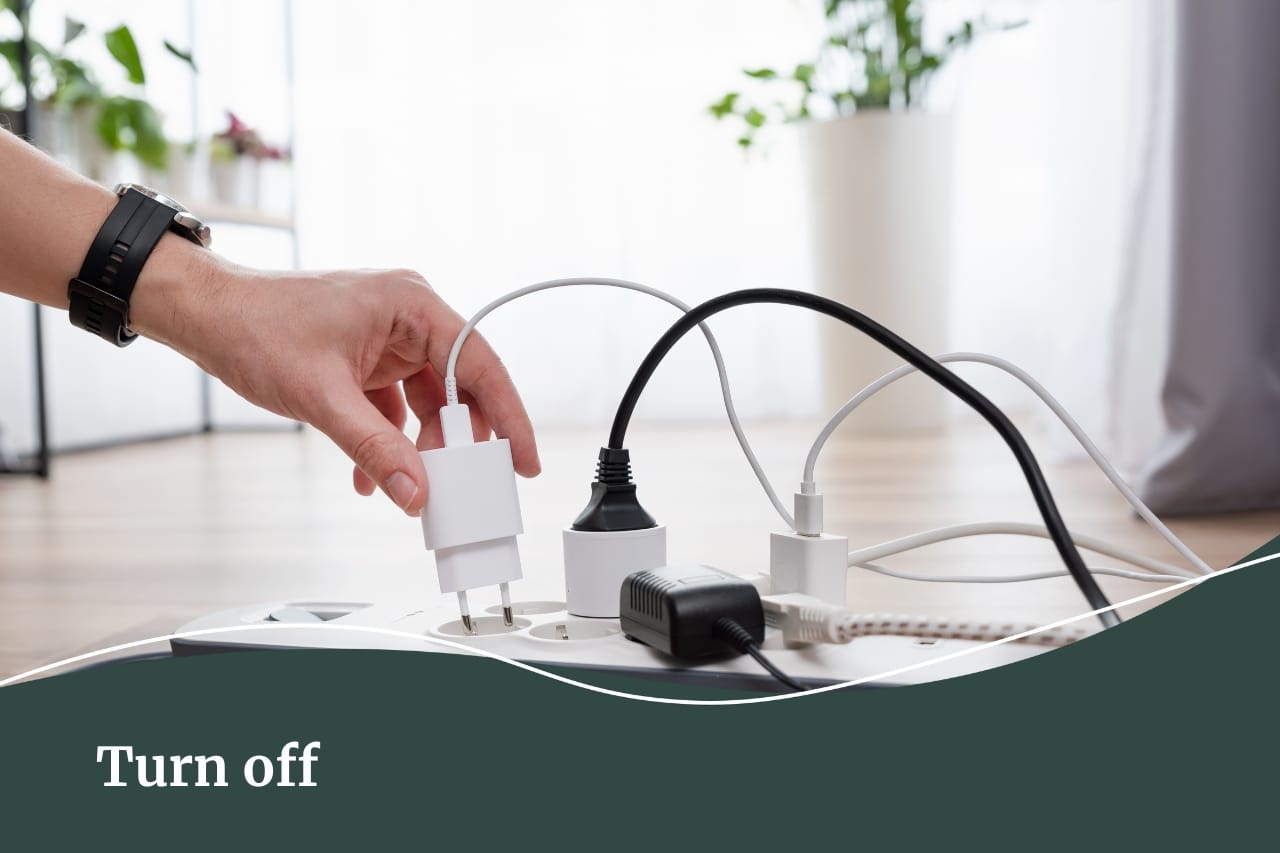
For appliances you want to keep and use but do not use regularly, ensure they are turned off at the switch to prevent unnecessary energy from being used.
Control the thermostat
There are many benefits to keeping your air conditioner running throughout the day and night at a reasonable temperature. On average, air conditioner companies recommend keeping your air conditioner running between 18 and 20 degrees for cost, comfort, and efficiency.
Running your air conditioner all day and night means you can keep all spaces inside your home at the same temperature, never dropping below 18 degrees, which helps prevent condensation and mould.
Keeping your home at a constant temperature also prevents you from wanting to set your air conditioner above 24 degrees to heat your house quickly. Every degree higher adds to the cost of your bill.
Actionair recommends that “the ideal winter night temperature for adults is between 15.6°C and 19.4°C, and for babies, it is between 20°C and 22.2°C.”
Give your heating system a yearly checkup
We are constantly reminded of the importance of cleaning and maintaining our heating systems when they are checked.
From watching our own and our clients’ air conditioners and heating systems being cleaned and maintained, we see firsthand how dirty and dusty these systems can be. Our property managers highly recommend regularly checking your machines to ensure they are working correctly.
Your health and safety are important, and therefore, regular maintenance to keep the air you breathe clean is of utmost priority.
Reverse your ceiling fans
If you have ceiling fans, you can use them to help distribute the warm air more efficiently. Hence, you can run your ceiling fans during winter to improve the heat distribution in the room, allowing you to turn the thermostat down and consume less energy. It is recommended that you only turn the fan on when you are using the space to ensure optimal use of your fan.
Take shorter showers
On average, about 25% of household electricity consumption is used for heating water. Consequently, looking at how long we are in the shower and reducing the time will help to save on our electricity bill!
Not only is this a great winter energy-saving idea, but reducing your shower time to 4 minutes daily can save you an average of 24 litres of water per shower and about $200 a year on your energy bills!
Install a low-flow shower head
If you want to reduce your energy bills even further this winter, consider switching to a low-flow showerhead. This easy change can help decrease your hot water usage, which tends to be high during showers.
Use LED light bulbs instead of CFL or incandescent
The most energy efficient type of light bulb is the LED. It wastes very little energy on heat, concentrating on light production instead. Incandescent lights waste the most energy. CFLs are not all that much better, releasing 80% as heat.
Gas heaters vs electric heaters
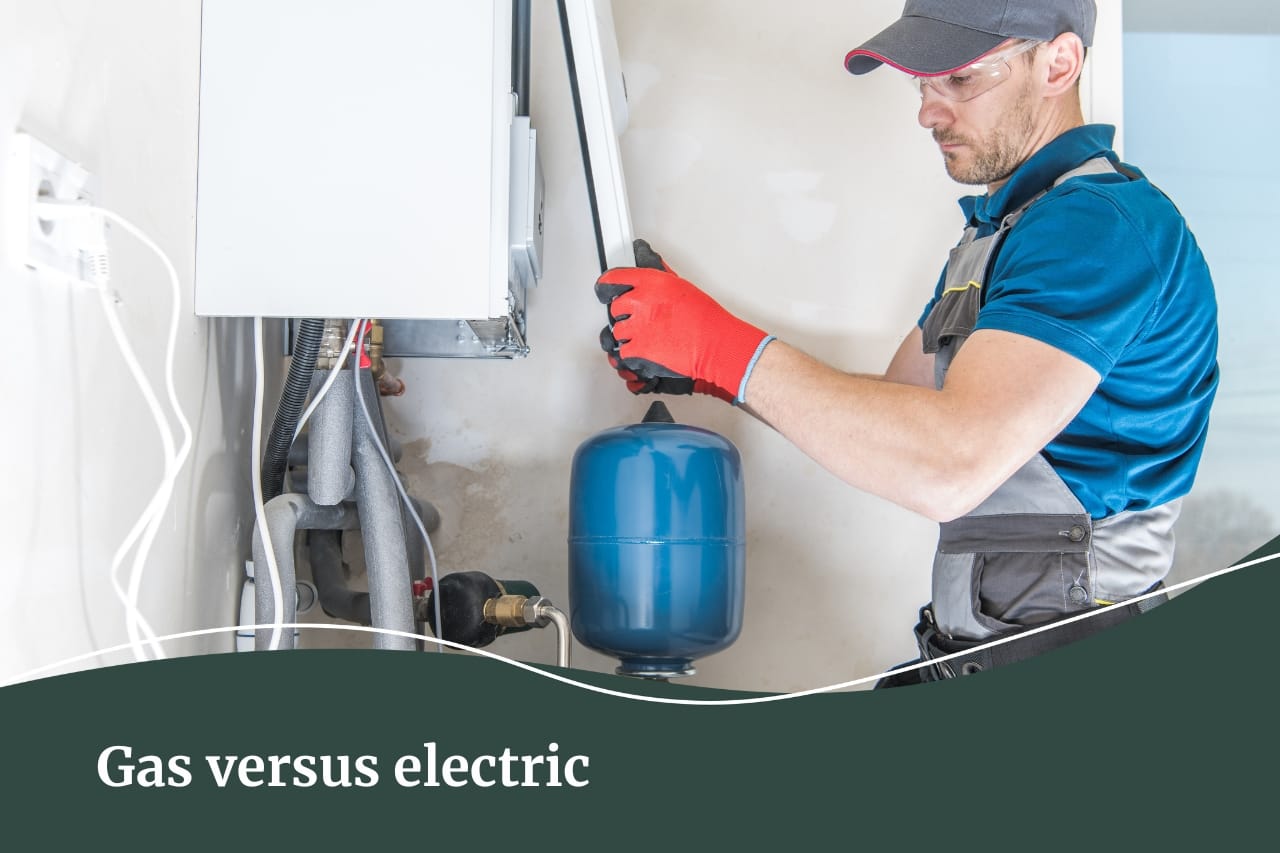
Both gas heaters and electric heaters have their pros and cons. For example, electric heaters are often cheaper to buy upfront and can be used for both portable and fixed installations. On the other hand, gas heaters are more expensive to purchase but are more energy efficient and generally much cheaper to run.
When considering gas heating, you should also research the difference in operating costs between natural gas (LNG), which uses home-supplied gas by pipeline and buying bottled gas (cylinders), known as liquified petroleum gas (LPG). This price may also differ between companies.
In general, LNG and LPG have different energy contents, gas and air mixes for combustion, and working pressures. Therefore, LNG is likely to be cheaper to buy than LPG. However, LPG is considered to have more than double the energy content of natural gas, making it more efficient and cheaper overall.
To learn more about LNG and LPG and the difference, click here.
You may also want to consider the following questions when deciding between gas and electric heaters:
- How healthy is your budget? Can you afford to purchase a more expensive product?
- What is the size of the space you want to heat? Which will be more practical, energy-efficient, and suited to the space and size you have to heat?
- Do you want to use the appliance for both heating and cooling?
Choose a heater to suit your space
When it comes to energy efficiency, it's crucial to choose a heater that suits the size of your room. Buying a heater for a small space that is large and equipped to heat a ballroom will use unnecessary energy and push your electricity bill higher than it needs to be.
You may find that a small, electric, energy-efficient heater is perfect for your office, while an electric radiant heater is ideal for a large loungeroom with high ceilings. In contrast, gas wall heaters can be a fantastic economical option for a variety of space sizes.
Another option is to heat the whole house using gas-ducted heating, which can be the most cost-effective method in the long run.
The most crucial step to take when considering winter energy saving ideas is to take a step. Whether you bookmark this page and start ticking off each idea or decide to buy a timer to have shorter showers, taking even one step will lower your energy bill and carbon footprint.
Would you also like to read our tips on maximising water efficiency in your household?
Disclaimer: The information on this website is not legal or professional advice and is general in nature; therefore, the editorial content or articles on this website are intended as a guide only and do not consider your personal objectives, financial situation or particular needs. For more information, please read our Terms of Use and Privacy Policy.

Related posts

A front-row seat to Cremorne’s coastline

Relocating to Tasmania: Freighting belongings
